
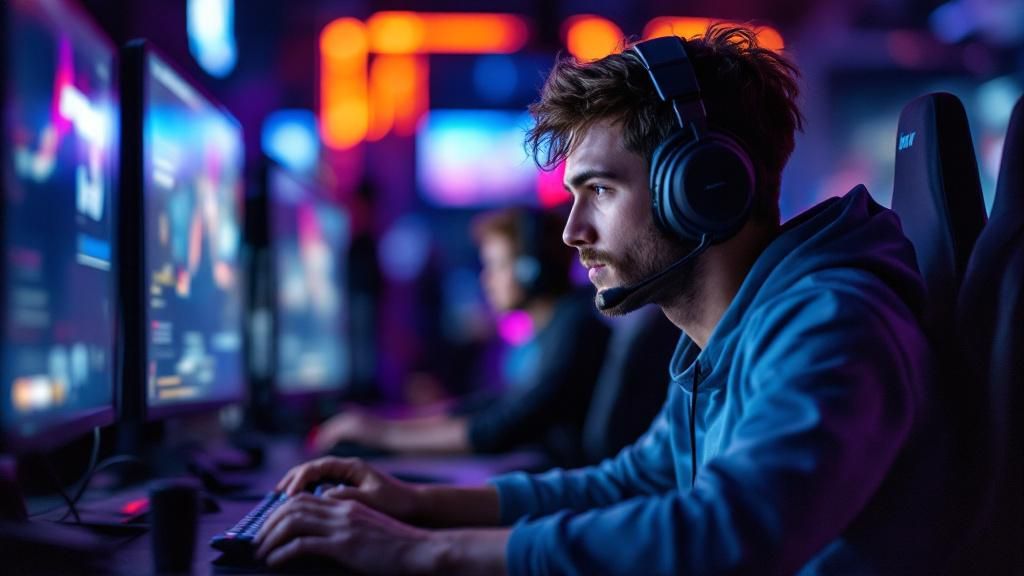
The competitive esports industry has undergone a notable transformation, with professional teams now acknowledging mental health as essential to player performance and wellbeing. Gone are the days when organisations focused solely on gaming prowess; today’s leading esports franchises commit significant funding towards psychological support, counselling services, and wellness programmes. This article explores how elite franchises are advancing mental health initiatives, the difficulties players face, and why this shift constitutes a fundamental evolution in professional gaming culture.
The Increasing Importance of Psychological Health in Competitive Gaming
The thriving esports landscape has undergone a significant shift in the past few years, with mental health becoming a critical component of athlete progression and team success. Professional teams now recognise that psychological resilience is just as vital as mechanical skill and tactical understanding. This recognition stems from mounting evidence that psychological health directly influences performance, consistency, and longevity within the competitive sphere. As competition intensifies and prize pools expand, competitors encounter intense demands, making comprehensive psychological assistance an vital priority rather than an optional luxury for ambitious teams.
The progression towards focusing on mental health indicates a wider maturation of esports as a recognised sporting discipline. Major franchises have begun implementing comprehensive wellness programmes that tackle pressure control, burnout prevention, and emotional resilience. These programmes acknowledge the unique psychological demands of professional esports, including extended training schedules, public scrutiny, and the constant pursuit of excellence. By fostering supportive environments and offering specialised mental health services, leading teams demonstrate their focus on player protection whilst also improving their competitive standing through better mental clarity, decision-making, and total performance outcomes.
Thorough Psychological Support Programmes in Top Teams
Leading esports organisations have established multifaceted mental health frameworks that surpass fundamental wellbeing programmes. These full-scale initiatives integrate expert therapeutic support, stress management training, and colleague support networks designed explicitly for the unique pressures of professional esports. Teams acknowledge that sustained performance demands emotional strength alongside technical skill, prompting investment in specialised psychological services that compares with conventional sporting bodies.
Specialist Counselling and Therapeutic Support
Elite esports franchises now recruit licensed psychologists and wellbeing experts who focus on sports performance and competitive psychology. These experts work directly with players to manage anxiety, depression, burnout, and the psychological toll of high-pressure competition. Consistent individual meetings provide secure assistance, enabling players to establish mental frameworks and sustain mental stability throughout intense competitive periods.
Moreover, various organisations provide access to specialised therapy modalities encompassing cognitive-behavioural therapy and mindfulness interventions. These research-supported approaches enable players to manage match anxiety, improve concentration, and develop emotional regulation skills. By promoting mental health conversations within team environments, clubs have successfully decreased stigma and prompted players to actively seek support rather than struggling alone.
Stress Management and Resilience Training
Thorough stress management programmes furnish players with useful techniques for navigating the significant demands characteristic of professional esports. Practice modules cover breathing exercises, systematic muscle relaxation, and mental reframing approaches intended to reduce competitive anxiety. These interventions help players to preserve mental clarity during high-stakes matches and recuperate efficiently between tournaments, ultimately boosting reliability and career durability.
Resilience training constitutes another cornerstone of current mental health support, focusing on developing psychological strength and adaptability. Coaches teach players to reinterpret difficulties as learning opportunities, strengthen self-belief through organised target-setting, and cultivate mental toughness. By integrating these psychological conditioning methods into regular team routines, organisations foster cultures where mental development mirrors technical development, creating well-rounded competitors able to succeeding in demanding conditions.
Effect on Player Performance and Collective Success
The integration of extensive psychological services has produced clear enhancements in athlete performance across professional esports organisations. Teams employing mental health professionals report improved concentration, improved decision-making during high-pressure matches, and improved reliability in performance. Players benefit from anxiety reduction strategies and emotional regulation strategies, allowing them to maintain optimal mental performance throughout intensive competitive calendars. This cognitive framework produces winning edges, as psychologically prepared players perform more reliably when stakes are highest.
Organisational performance increasingly correlates with spending on player support schemes. Teams providing robust mental health resources achieve better player retention, reduced burnout-related absences, and stronger team cohesion. The support framework fosters safer settings where athletes speak candidly about challenges, fostering trust between management and athletes. This transparency enables prompt action when problems emerge, stopping small problems from escalating into serious problems that may harm both player prospects and organisational outcomes during key competitive phases.
Looking ahead, mental health support constitutes a fundamental essential requirement rather than a luxury amenity in professional esports. Teams prioritising psychological wellbeing draw in higher-calibre talent, maintain healthier rosters, and achieve long-term competitive performance. As the industry matures, organisations recognising this connection will establish themselves as industry frontrunners, setting standards that redefine professional gaming excellence beyond mere technical skill to encompass holistic athlete development and long-term career sustainability.
